Context
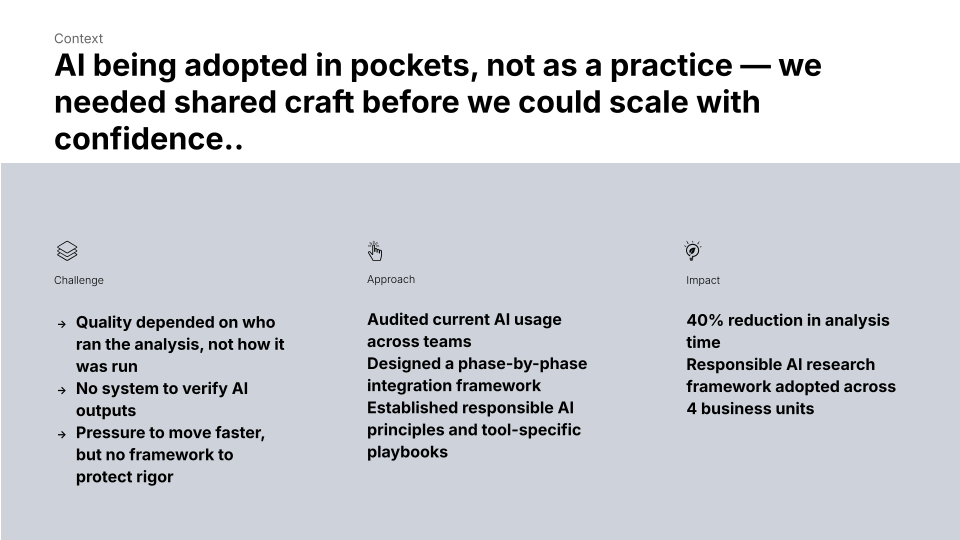
AI tools were being adopted across the research team, but each researcher used them differently. Without shared methods, the quality of the analysis depended on the researcher.
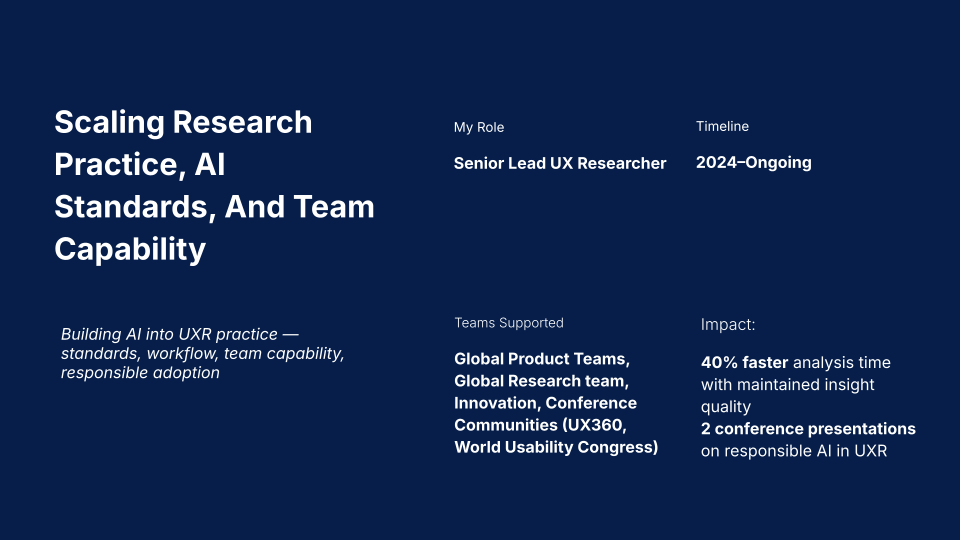
This project built a shared practice for using AI in research: faster analysis with methods stakeholders can trust.
This project built a shared practice for using AI in research: faster analysis with methods stakeholders can trust.
Constraints
Tools: Teams used 6+ research tools, with no central repository connecting their work.
Time and resources: The practice was built alongside active research projects, not as a dedicated initiative.
Pace of change: AI tools changed every few months, so the practice had to outlast any single tool.
Time and resources: The practice was built alongside active research projects, not as a dedicated initiative.
Pace of change: AI tools changed every few months, so the practice had to outlast any single tool.
Key Decisions
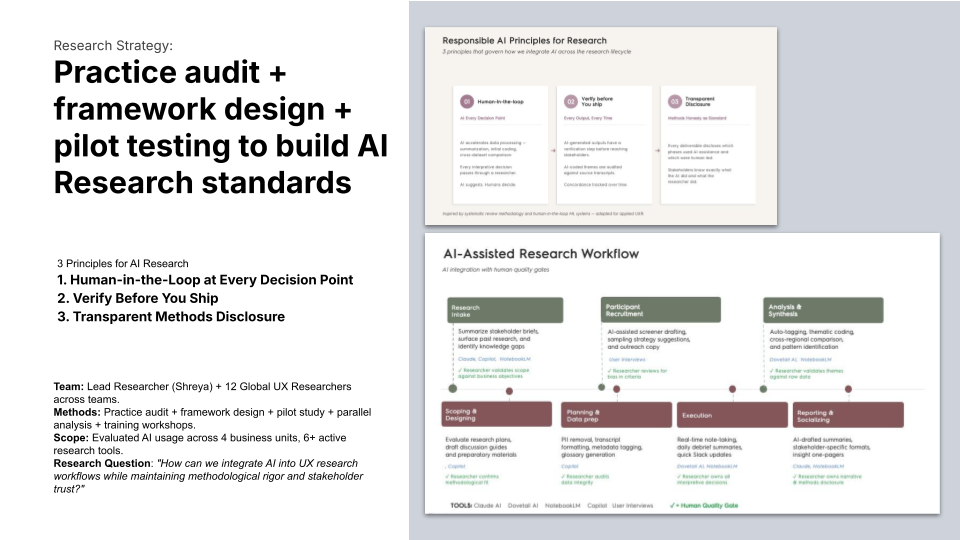
Focus AI on repetitive tasks: Interpretation and cultural analysis stay human-led.
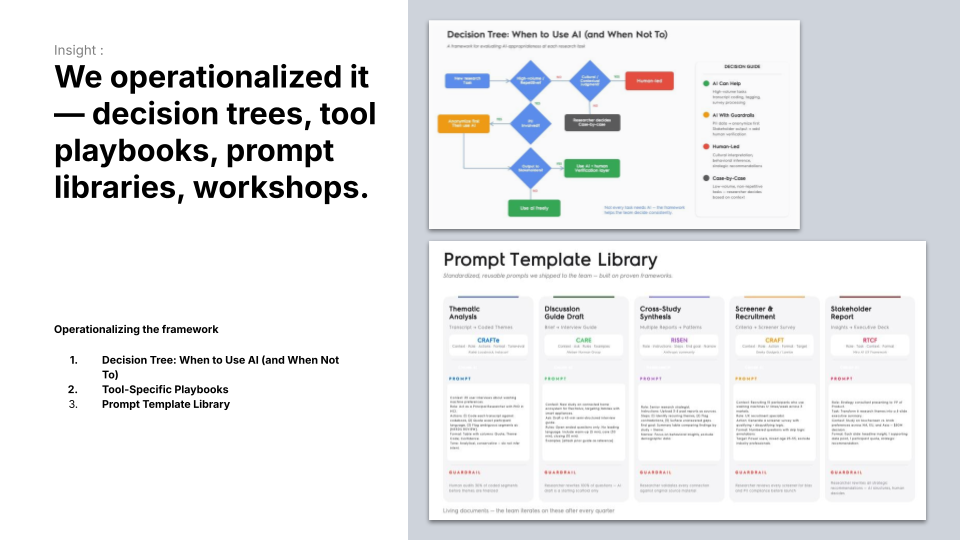
Context engineering: Structured and standardized prompt templates (context, role, data, format) keep outputs consistent across researchers.
Kept templates as living documents: Prompts and playbooks are reviewed every quarter as tools and skills change.
Disclosed AI use in every deliverable: Each report includes a short note on where AI supported the work and where researchers led.
This helps stakeholders understand how findings were produced and builds confidence in using them.
Reinvest time in storytelling: Time saved on coding and summaries goes into synthesis and creative storytelling, so findings are easier for teams to act on.
Context engineering: Structured and standardized prompt templates (context, role, data, format) keep outputs consistent across researchers.
Kept templates as living documents: Prompts and playbooks are reviewed every quarter as tools and skills change.
Disclosed AI use in every deliverable: Each report includes a short note on where AI supported the work and where researchers led.
This helps stakeholders understand how findings were produced and builds confidence in using them.
Reinvest time in storytelling: Time saved on coding and summaries goes into synthesis and creative storytelling, so findings are easier for teams to act on.
Process
Impact and Next Steps
Speed: ~40% faster analysis.
Adoption: 4 business units, with 12 researchers trained.
Visibility: Presented at UX360, IDSA IDC 2026 and the World Usability Congress (2025)
Adoption: 4 business units, with 12 researchers trained.
Visibility: Presented at UX360, IDSA IDC 2026 and the World Usability Congress (2025)
🌱 An evolving practice, updated as tools and skills change.
Reach out to learn more.
Reach out to learn more.